
Why Your Suitcase Always Feels Too Full on the Way Home

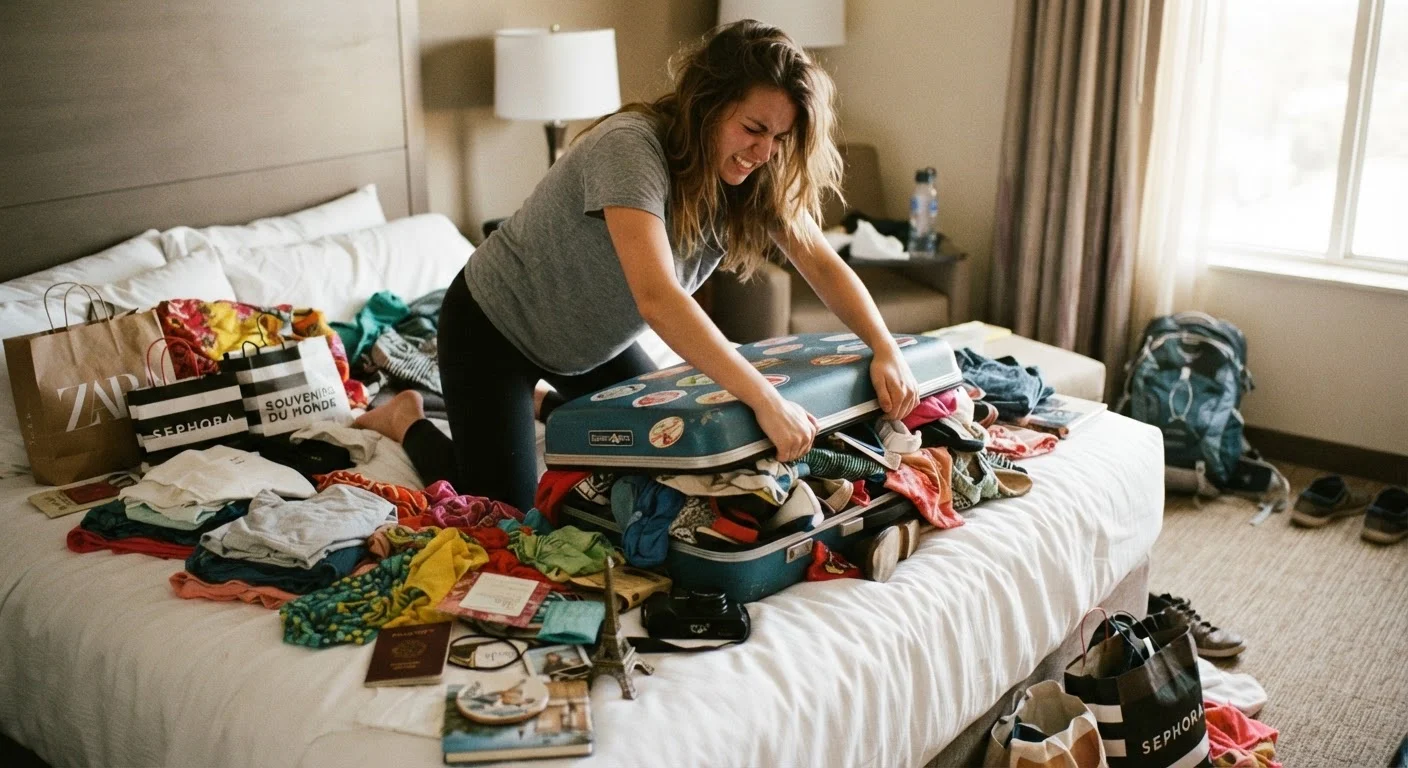
Photo: AnswersVista.com | Trustworthy Information Every Day editorial
Key Takeaways
- Most travelers underestimate how much space souvenirs, gifts, and purchases will need on the way home.
- Laundry adds bulk and weight even when clothes are clean — dirty laundry compresses less than folded items.
- Planning for return-trip volume before you leave is the most reliable fix.
- A collapsible bag or built-in luggage expansion can absorb overflow without a checked-bag fee.
- Shipping items home before your return flight is sometimes cheaper than overweight baggage charges.
The Return-Trip Packing Problem Is a Planning Problem
Almost every traveler has been there: you pack a perfectly organized bag before departure, then spend 20 minutes kneeling on a hotel room floor trying to force it shut before checkout. The suitcase didn't shrink — your stuff grew.
This is one of the most consistent friction points in travel, and it's rarely about discipline or willpower. It's a planning failure that happens at the very start of the trip, not the end. Understanding why the bag fills up — and building that reality into how you pack — is the only reliable fix. See our guide to the science behind packing light for the deeper cognitive reasons overpacking happens in the first place.
Packing the bag to capacity before leaving home.
Ignoring how much space dirty laundry actually takes up.
Buying souvenirs and gifts without any plan for how they'll get home.
Assuming travel-sized toiletries won't be replaced mid-trip.
Rolling or folding clothes tightly on departure but not on return.
How to Pack Smarter Before You Even Leave Home
The single most effective change you can make is leaving deliberate space in your bag before departure. If your suitcase is 90% full going out, it will be 110% full coming back. Target 70–75% capacity on the outbound trip — this feels wasteful until you're calmly zipping your bag at checkout.
Overweight Bag Fees Add Up Quickly
A few other habits that consistently help:
- Pack a collapsible duffel or tote. A lightweight foldable bag takes up almost no space going out and becomes your overflow carrier on the way home. This sidesteps checked-bag fees at many carriers if it qualifies as a personal item.
- Wear your bulkiest items on travel days. Save suitcase space by wearing heavier shoes, jackets, or layered clothing through the airport.
- Ship before you fly. For large or fragile souvenirs, shipping directly from the destination can cost less than an overweight bag fee — compare rates before you decide.
For travelers debating whether to check a bag at all, our breakdown of carry-on vs. checked luggage trade-offs covers the cost and convenience math in detail. And if you're curious whether your luggage choice itself is part of the problem, hard-shell vs. soft-shell luggage explains how bag flexibility affects how much you can realistically fit.
~$25–$100+
Typical overweight baggage fee per bag
Most major U.S. carriers charge fees for bags exceeding 50 lbs, with fees varying by airline, route, and fare class — always verify current policies directly with your carrier.
30%
Recommended buffer space to leave on departure
Travel organizers and packing experts commonly suggest leaving roughly a third of bag volume free to accommodate items acquired during the trip.
The overarching principle: your packing system should account for the whole trip, not just the departure day. Travelers who plan for what they'll bring back consistently have smoother return journeys than those who try to improvise at the end.
The content provided on our blog site traverses numerous categories, offering readers valuable and practical information. Readers can use the editorial team’s research and data to gain more insights into their topics of interest. However, they are requested not to treat the articles as conclusive. The website team cannot be held responsible for differences in data or inaccuracies found across other platforms. Please also note that the site might also miss out on various schemes and offers available that the readers may find more beneficial than the ones we cover.