
Rolling vs. Folding Clothes: What Actually Saves More Space

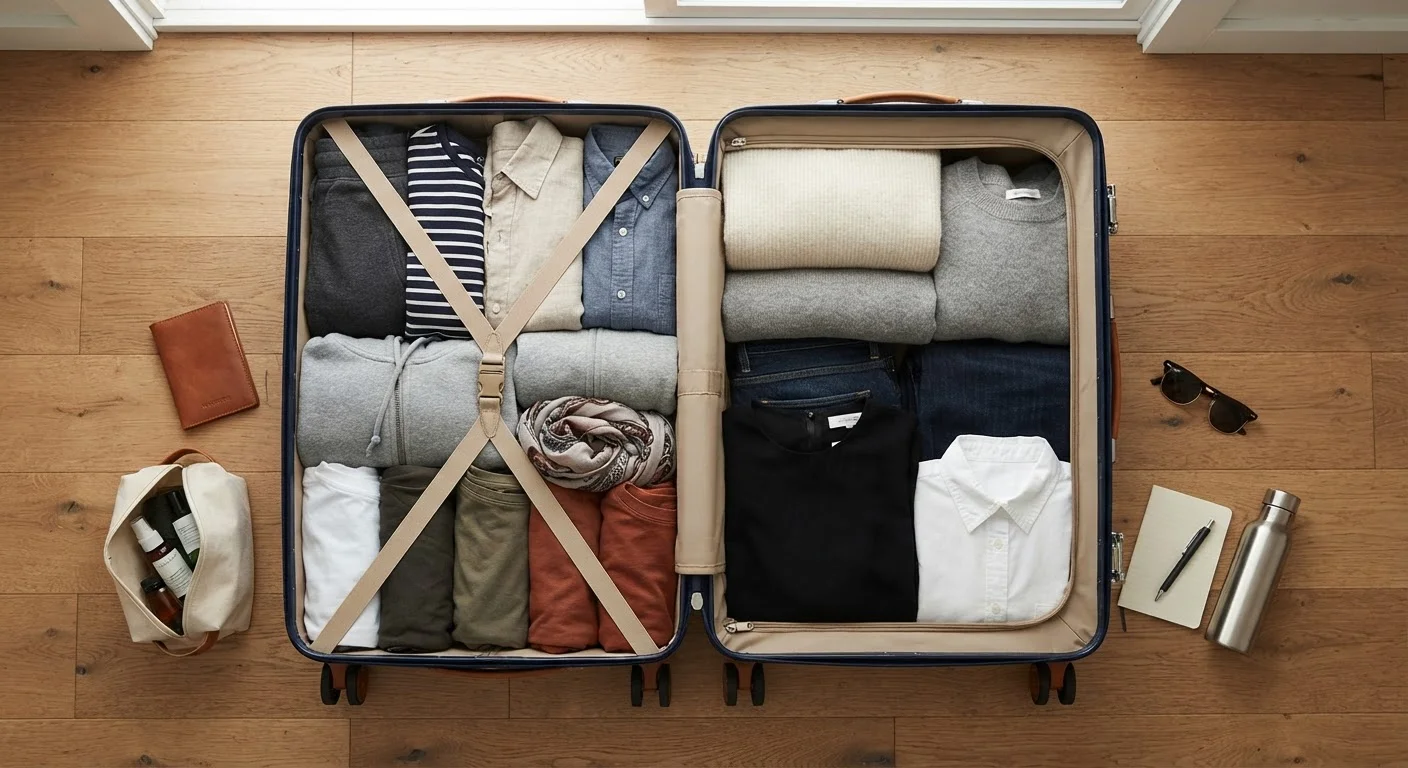
Photo: AnswersVista.com | Trustworthy Information Every Day editorial
Key Takeaways
- Rolling generally saves more space in soft-sided bags and works well for casual, wrinkle-resistant fabrics.
- Folding is better for structured garments like dress shirts, blazers, and trousers prone to creasing.
- A hybrid approach — rolling some items and folding others — outperforms either method used exclusively.
- The shape of your luggage matters: rolling suits cylinder-shaped bags, folding suits flat suitcases.
- Packing cubes amplify the benefits of whichever method you choose by keeping items compressed and organized.
The Space Question: What the Evidence Actually Shows
The debate over rolling versus folding comes down to geometry and fabric behavior. Rolling clothes into tight cylinders eliminates the flat air pockets that form between folded layers. For soft, flexible fabrics — cotton T-shirts, athletic wear, lightweight pants — rolling can reduce the volume of a clothing stack by a meaningful margin compared to standard folding. That said, the gain varies significantly by garment thickness and how tightly you roll.
Folding, when done with precision, creates a uniform stack that fits predictably into rectangular suitcase compartments. The trade-off is that folded stacks tend to shift during transit and the layers trap more dead air. For travelers trying to maximize every inch of carry-on space, rolling edge-to-edge across the base of a bag generally outperforms a folded pile. For a deeper look at the broader case for packing less, see the science behind packing light.
Wrinkle Prevention: Where Folding Holds Its Ground
Rolling has a real weakness: it can create persistent diagonal creases in structured fabrics. Dress shirts, blazers, linen trousers, and anything with a defined shape will arrive more wrinkle-free when folded flat and layered with tissue paper or placed in a dry-cleaning bag. The reason is that rolling forces fabric along its bias grain, which is more prone to creasing under sustained compression than a clean fold along a seam or hem.
The military roll (also called the ranger roll) — where the bottom hem is folded over the outside of the roll — helps lock wrinkles in and keeps rolls from unraveling, but it doesn't solve the underlying issue for structured garments. If you're traveling for business and need to step off the plane looking polished, folding your dress clothes is worth the space trade-off.
Use a Dry-Cleaning Bag for Dress Clothes
Fabric Type and Garment Structure Matter Most
The single most useful filter for choosing your method is fabric behavior. Here's a practical breakdown:
- Roll: T-shirts, jeans, leggings, athletic wear, underwear, socks, casual shorts, fleece layers
- Fold: Dress shirts, blazers, structured trousers, linen or silk blouses, knitwear (rolling can stretch necklines)
- Either: Lightweight sweaters, casual button-downs, chinos
Knitwear deserves special mention — rolling it can distort the fabric and stretch the collar. Folding knitwear loosely and placing it on top of the stack (where pressure is lowest) is the safer approach.
| Rolling | Folding | |
|---|---|---|
| Space efficiency | Higher for soft fabrics | Better for structured garments |
| Wrinkle prevention | Weaker on structured clothes | Stronger for dress wear |
| Best fabric types | Cotton, synthetics, denim | Linen, silk, wool, blazers |
| Best luggage type | Soft-sided, duffels, backpacks | Hard-shell, flat suitcases |
| Organization visibility | Easy (vertical orientation) | Harder (stacked layers) |
| In-trip retrieval | Good (modular rolls) | Disruptive if unstacked |
Luggage Shape Changes the Calculus
Your bag's internal geometry should influence your method as much as your fabric choices. A rectangular hard-shell suitcase with a flat, even cavity suits stacked folding — rows of folded clothes sit flush against the walls with minimal wasted space. A soft-sided duffel or a backpack with an irregular shape benefits more from rolled items, which can be wedged into corners and gaps that folded stacks can't fill.
For carry-on rollaboards — the most common travel bag — a hybrid approach tends to work best: fold structured garments flat in the main compartment and roll softer items to fill corners and the perimeter. Packing cubes can then compress and contain each category, preventing the mixing that causes wrinkling during transit. The luggage shell itself also affects the equation — see hard-shell vs. soft-shell luggage for a side-by-side comparison of how each type performs in real conditions.
The Hybrid Method: Getting the Best of Both
Most frequent travelers land on the same conclusion: neither method alone is optimal. A practical hybrid system looks like this — fold dress clothes, tailored items, and anything structured flat in one section of the bag; roll everything casual into tight cylinders and pack them vertically (seam-side down so you can identify items at a glance) in another section or into packing cubes. This approach also makes in-trip organization much easier, since you can retrieve one item without disturbing everything else.
If you're deciding whether this level of organization is even worth it relative to just checking a bag, packing light vs. checking bags walks through the full logistics of that trade-off. And if over-packing has been a persistent problem, common travel gear myths addresses many of the assumptions that lead travelers to pack more than they need.
The content provided on our blog site traverses numerous categories, offering readers valuable and practical information. Readers can use the editorial team’s research and data to gain more insights into their topics of interest. However, they are requested not to treat the articles as conclusive. The website team cannot be held responsible for differences in data or inaccuracies found across other platforms. Please also note that the site might also miss out on various schemes and offers available that the readers may find more beneficial than the ones we cover.