
Packing Cubes Explained: How They Work and When They're Worth Using

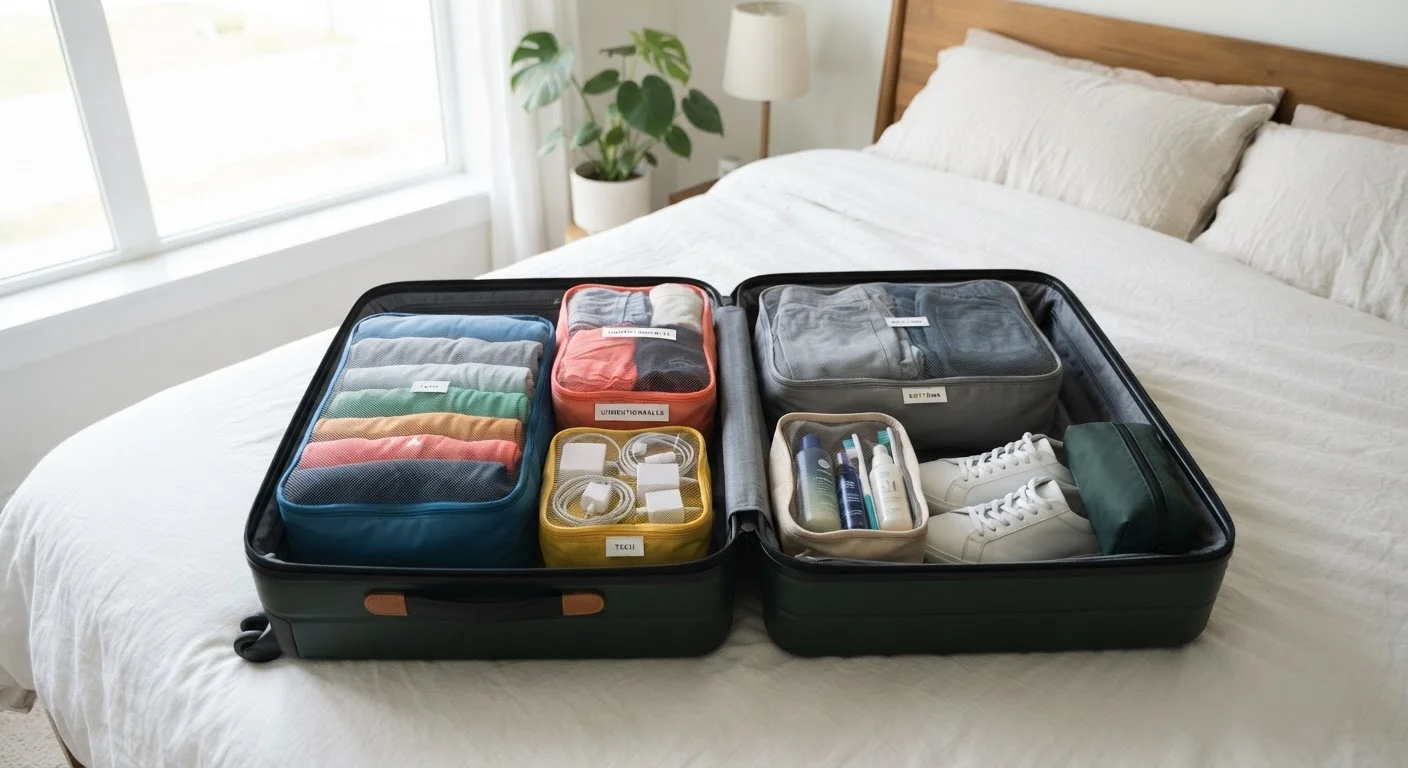
Photo: AnswersVista.com | Trustworthy Information Every Day editorial
Key Takeaways
- Packing cubes primarily organize clothing rather than dramatically compress it.
- Compression cubes can reduce volume, but mainly for compressible fabrics like knits and synthetics.
- They're most useful for trips with multiple destinations, shared bags, or frequent repacking.
- For ultra-minimalist carry-on packers, cubes can add weight without adding meaningful benefit.
- Choosing the right cube size for your bag's dimensions matters more than most buyers expect.
What Packing Cubes Actually Do
The core job of a packing cube is compartmentalization, not compression. Think of your suitcase as a single open bin. Without any system, clothing shifts during transit, socks hide under shirts, and finding one item means disturbing everything else. Packing cubes turn that bin into a set of labeled drawers — each cube holds a category, and you pull out only what you need.
Most cubes are rectangular fabric pouches with a mesh or solid top panel and a single perimeter zip. When you open your bag at a hotel, instead of unpacking entirely, you can simply pull out the relevant cube. Some travelers even skip unpacking altogether, leaving cubes inside the bag and treating it like a portable dresser.
This organizational benefit is genuinely useful, but it's also the entire value proposition for standard cubes. If you're expecting a significant volume reduction, you'll need to look specifically at compression cubes — and even those have limits. See how packing cubes fit into a broader packing strategy in our complete guide to packing for every type of trip.
30–40%
Volume reduction possible with compression cubes
Achievable with compliant soft fabrics like merino wool and synthetics; results vary significantly by garment type.
1–3 oz
Typical weight added per packing cube
Weight varies by cube size and material; relevant for travelers with strict carry-on weight limits.
4+ days
Trip length where cubes tend to earn their keep
Shorter trips rarely justify the added weight and complexity of a full cube system.
Compression Cubes vs. Standard Cubes: A Clear Comparison
Standard cubes keep items grouped and make your bag tidier. Compression cubes add a second zip along the side or top that, when closed, physically squeezes down the cube's profile. The compression effect is real but selective.
Soft, pliable fabrics — merino wool, synthetics, fleece, light cotton — respond well to compression. You can often reduce a cube's thickness by 30–40% with compliant garments. Stiffer items like denim, structured jackets, or dress shirts compress far less and may wrinkle under pressure.
The trade-off with compression cubes is weight. They contain additional zippers and reinforced panels, making them heavier than standard cubes — sometimes significantly so for a small bag. If you're packing carry-on only with a strict weight limit, compression cubes can eat into your payload without returning equivalent savings.
Test Compression Before You Commit
Who Benefits Most from Packing Cubes
Packing cubes deliver clear value in specific travel situations:
- Multi-destination trips: Moving between several cities or hotels means repacking repeatedly. Cubes let you grab and go without reorganizing from scratch each time.
- Shared luggage: Traveling with a partner and sharing one checked bag becomes much more manageable when each person's clothing occupies distinct cubes.
- Backpack travelers: Backpacks lack the internal structure of hard-shell suitcases. Cubes provide rigidity and prevent the bag from becoming a tangled heap.
- Families packing together: Keeping each family member's items in their own cube eliminates the chaos of communal packing in one bag.
On the other hand, if you're an experienced minimalist packer flying carry-on only with a single personal item, cubes may work against you. The fabric and zipper hardware add weight — typically 1–3 oz per cube — and for very small bags, the rigid cube shapes can actually waste the irregular space that loose packing fills more efficiently. For that use case, read our realistic walkthrough for packing a week into a personal item bag.
Getting the Most Out of Packing Cubes
If you decide cubes are right for your travel style, a few practical habits make the biggest difference:
- Match cube dimensions to your bag: Measure your bag's interior and choose cubes that stack flat without wasted vertical space. A cube that's slightly too tall forces awkward angles and wasted room.
- Combine with an efficient folding method: Cubes don't choose your folding technique for you. Rolling vs. folding each have trade-offs for space and wrinkle control — pick the method that suits your wardrobe before loading cubes.
- Use fewer, larger cubes rather than many small ones: More cubes means more zipper hardware and edge fabric, reducing the usable interior. Two medium cubes often outperform four small ones.
- Reserve compression cubes for the right fabrics: Pack your soft layers in compression cubes and your structured items in standard cubes or directly in the bag.
If you're weighing whether to go carry-on only, our breakdown of carry-on versus checked bag trade-offs will help you think through the full picture before committing to a system.
Frequently Asked Questions
The content provided on our blog site traverses numerous categories, offering readers valuable and practical information. Readers can use the editorial team’s research and data to gain more insights into their topics of interest. However, they are requested not to treat the articles as conclusive. The website team cannot be held responsible for differences in data or inaccuracies found across other platforms. Please also note that the site might also miss out on various schemes and offers available that the readers may find more beneficial than the ones we cover.