
Leasing vs. Buying: Understanding the Long-Term Financial Trade-offs

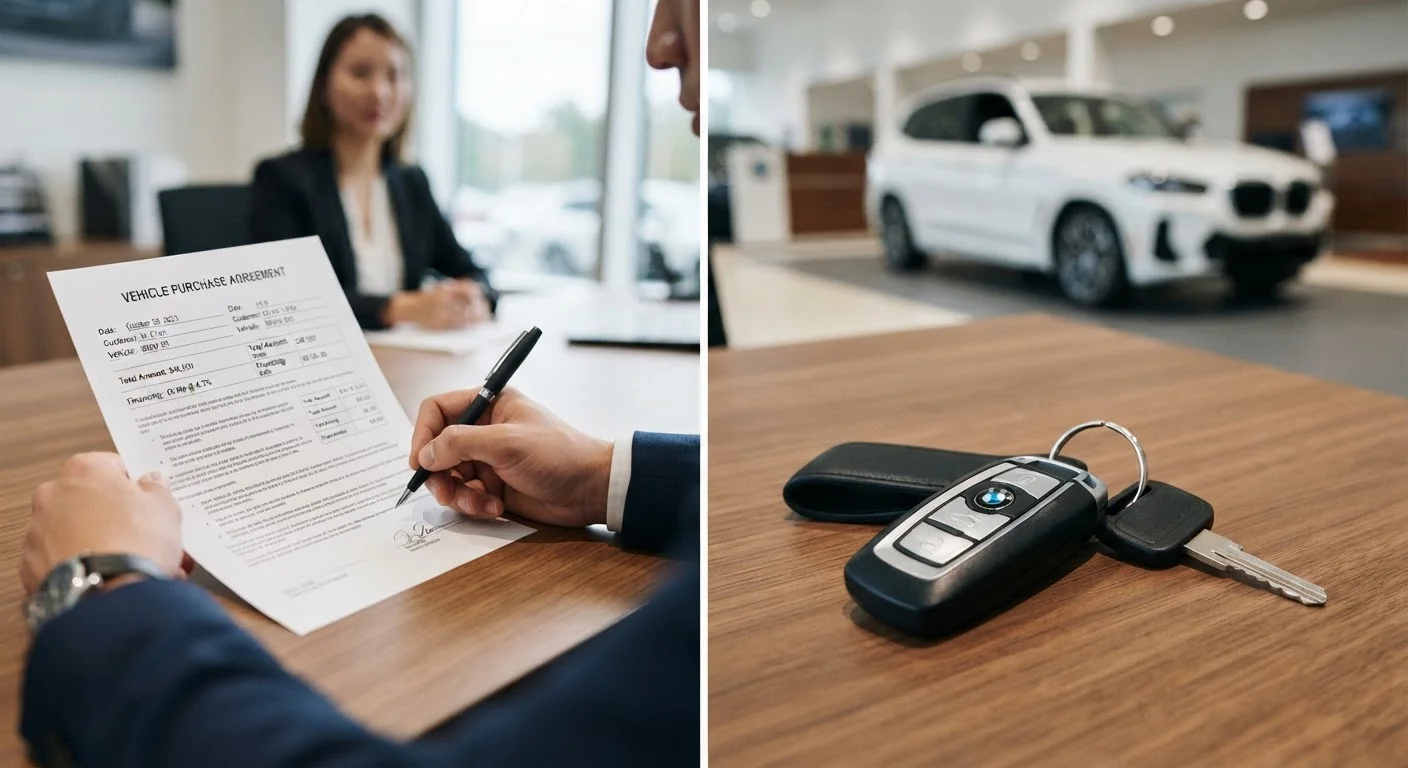
Photo: AnswersVista.com | Trustworthy Information Every Day editorial
Key Takeaways
- Leasing typically offers lower monthly payments but you build no equity in the vehicle.
- Buying costs more per month short-term but eliminates payments once the loan is paid off.
- Mileage limits, wear-and-tear fees, and disposition fees can make leasing more expensive than expected.
- Ownership gives flexibility - you can sell, modify, or keep the car as long as you want.
- Total cost over five or more years generally favors buying for most typical drivers.
- Your driving habits, financial priorities, and tolerance for commitment all affect which path makes sense.
How the Two Paths Are Structured Financially
Understanding leasing versus buying starts with the underlying mechanics. When you lease, you're essentially paying for the vehicle's depreciation during the lease term - plus a financing charge - rather than paying toward ownership. When the lease ends, the car goes back. When you buy (whether with cash or a loan), every payment builds equity toward an asset you'll eventually own outright.
For a deeper look at terminology like depreciation and total cost of ownership, see our Car Ownership Cost Glossary. Understanding these terms helps make sense of what each path actually charges you for.
Lease payments are calculated on the vehicle's residual value - what it's predicted to be worth at lease end - subtracted from the selling price, then divided across the term and layered with a money factor (the lease equivalent of an interest rate). Loan payments are calculated on the full vehicle price minus any down payment, multiplied over the loan term at your APR. For a detailed look at how loan terms affect what you pay, our guide on APR and loan term costs breaks down the numbers clearly.
| Criterion | Leasing | Buying |
|---|---|---|
| Monthly payment | Generally lower | Generally higher |
| Ownership at term end | None - car returned | Full ownership of asset |
| Mileage limits | Yes - fees apply if exceeded | No limits |
| Modification allowed | No - must return as-is | Yes - owner's discretion |
| Long-term total cost | Higher if continuously leasing | Lower once loan is retired |
| Early exit flexibility | Limited - penalties apply | Sell or trade anytime |
| Maintenance responsibility | Covered under warranty term | Owner's responsibility as car ages |
| Equity building | None | Yes - resale or trade-in value |
Where Costs Diverge Over Time
Month to month, leasing almost always looks cheaper on paper. But the comparison changes significantly once you extend the timeline. A buyer who pays off a five-year loan and keeps the vehicle for three more years spreads the purchase cost across eight years of ownership. A lessee cycling through three-year agreements never reaches that payment-free stage.
~50%
Typical vehicle depreciation in first 3 years
Industry data consistently shows new vehicles lose a significant portion of their value in the early years - the period most leases cover.
11.5 years
Average age of vehicles on U.S. roads
According to S&P Global Mobility data, Americans are holding onto vehicles longer, which tends to favor the economics of ownership over repeated leasing.
$0.25/mile
Common excess mileage charge on leases
Drivers who exceed lease mileage caps - often set at 10,000-12,000 miles per year - face per-mile charges that can total thousands of dollars at lease return.
There are also lease-specific costs that don't appear in monthly payment comparisons: excess mileage charges (commonly $0.15-$0.25 per mile over the limit), disposition fees charged when returning the vehicle, and excess wear-and-tear fees assessed against the returned car's condition. These charges can add hundreds or thousands of dollars to the effective lease cost - a reality worth accounting for upfront. Our article on the full financial commitment of car ownership outlines all the cost categories drivers commonly overlook.
Buyers face their own variables: loan interest adds to the purchase price, and older vehicles require more maintenance investment. However, once the loan is paid, those dollars stay in your pocket - or can fund the next vehicle purchase outright.
The Equity and Flexibility Question
One of the clearest structural differences is what you hold at the end. A buyer who finishes a loan owns an asset with real-world resale or trade-in value. A lessee who returns a vehicle walks away with nothing beyond the experience of having driven it. For drivers who plan to use the vehicle as a trade-in toward the next purchase, that equity can meaningfully offset future costs.
Flexibility is another factor. Owners can sell privately, donate, modify, or simply keep driving well past the point where others might upgrade. Leases, by contrast, include contractual restrictions: mileage caps, condition requirements, and early termination penalties that can make exiting mid-lease expensive. If your life circumstances shift - a job change, a growing family, a relocation - lease terms offer little flexibility to adjust cheaply.
That said, ownership isn't cost-free beyond the loan payoff. Maintenance and repair responsibilities increase as vehicles age. Financially savvy long-term owners budget proactively for this - a subject covered in depth in our guide to keeping long-term ownership costs under control.
Lease-End Purchase Option: A Middle Path
Making the Right Call for Your Situation
Neither option is universally superior. The right choice depends on how you use your vehicle, how long you plan to keep it, and what financial trade-offs matter most to you. For a broader view of how this decision fits into total cost thinking, our total cost of ownership guide offers a framework that applies beyond just vehicles.
If you're also weighing a new versus used vehicle alongside this decision, the new car vs. used car ownership math article provides useful context on how depreciation and warranty coverage interact with both leasing and buying decisions.
Whichever direction you lean, the goal is the same: know what each path will actually cost over the full period you plan to be in the vehicle, not just what shows up as a monthly line item. A lower payment today can cost considerably more in total - and a higher payment today can pay off significantly if you hold the vehicle long enough.
This article is for general informational and educational purposes only and does not constitute personalized financial advice. Consult a qualified financial professional for guidance specific to your circumstances.
The content provided on our blog site traverses numerous categories, offering readers valuable and practical information. Readers can use the editorial team’s research and data to gain more insights into their topics of interest. However, they are requested not to treat the articles as conclusive. The website team cannot be held responsible for differences in data or inaccuracies found across other platforms. Please also note that the site might also miss out on various schemes and offers available that the readers may find more beneficial than the ones we cover.