
New Car vs. Used Car: What the Total Ownership Math Actually Looks Like

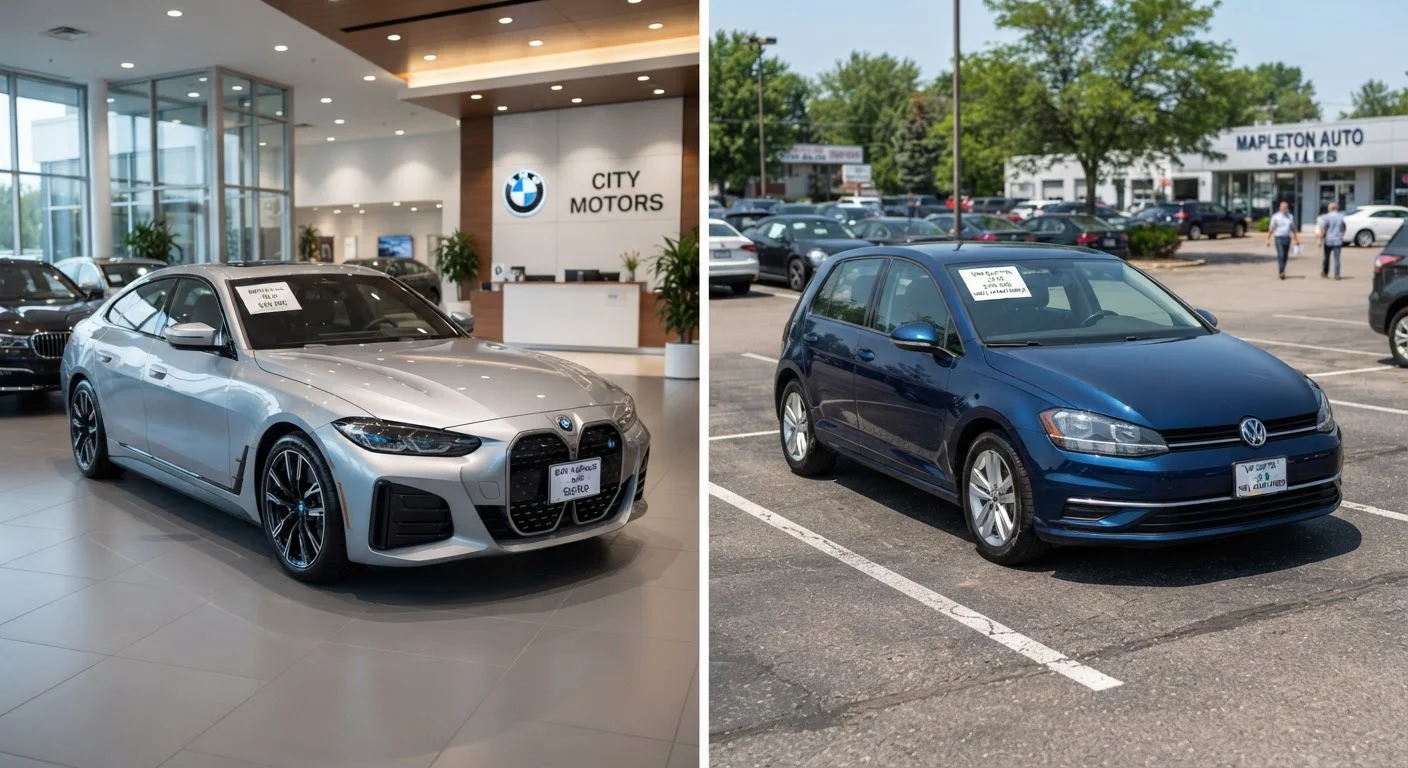
Photo: AnswersVista.com | Trustworthy Information Every Day editorial
Key Takeaways
- New cars lose 15-25% of their value in the first year alone, making depreciation the largest ownership cost.
- Used cars have lower sticker prices but may carry higher interest rates and repair uncertainty.
- Warranty coverage is a major financial buffer that new cars offer and most used cars lack.
- Insurance premiums are typically higher for new vehicles due to their replacement value.
- Total cost of ownership, not purchase price, is the number that actually matters for your budget.
Why Sticker Price Is the Wrong Number to Compare
Most car-buying conversations start with purchase price. That's understandable - it's the most visible number. But focusing only on what you pay at signing ignores the costs that accumulate over years of ownership, and those are often far larger.
Total ownership cost includes depreciation, financing charges, insurance premiums, fuel, scheduled maintenance, unplanned repairs, and registration fees. When you add all of these up across a typical five-year ownership window, the gap between new and used vehicles often looks very different from what the window sticker suggested.
For a structured breakdown of these cost categories, the Car Ownership Cost Glossary covers the key terms worth understanding before you run any numbers.
| Criterion | New Car | Used Car |
|---|---|---|
| Purchase Price | Higher (full market value) | Lower (depreciation absorbed) |
| Depreciation Rate | Steepest in first 1-2 years | Slower, curve already passed |
| Warranty Coverage | Full manufacturer warranty | Limited or none (CPO may vary) |
| Financing APR | Typically lower rates | Typically higher rates |
| Insurance Premiums | Higher (greater vehicle value) | Generally lower |
| Repair Risk | Low (warranty covers most) | Variable (depends on vehicle age) |
| Latest Safety Features | Standard on current models | Depends on model year |
Depreciation: The Cost Nobody Talks About Enough
Depreciation is consistently the single largest cost of owning a vehicle, and it hits new cars hardest and fastest. Industry data from sources like Edmunds and iSeeCars has historically shown that a new vehicle can lose 15-25% of its value within the first twelve months. By year five, many vehicles retain only around 40% of their original purchase price.
A used car that is two to three years old has already absorbed that steepest portion of the depreciation curve. The buyer of that vehicle doesn't experience that loss - the original owner did. This is one of the most compelling financial arguments for buying used, and it's why understanding how depreciation works is essential before signing anything.
~20%
Average new car value lost in year one
Industry analyses from sources including Edmunds and iSeeCars consistently show new vehicles lose roughly 15-25% of value in their first twelve months.
~40%
Typical value retained after five years
Depreciation curves vary by brand and segment, but many vehicles retain only around 40% of original MSRP by the end of year five.
1-2 pts
Typical APR gap: new vs. used loans
Federal Reserve consumer credit data has historically shown used vehicle loan rates running 1-2 percentage points higher than comparable new vehicle loans.
The trade-off is that a newer used vehicle commanding a strong resale price may not offer as dramatic a discount as buyers expect, especially in tight inventory markets.
Warranties, Repairs, and the Risk Equation
New vehicles typically come with a manufacturer's bumper-to-bumper warranty covering three years or 36,000 miles, plus a longer powertrain warranty often extending five years or 60,000 miles. These warranties function as financial insurance - they convert unpredictable repair costs into predictable scheduled maintenance.
Used vehicles, unless certified pre-owned (CPO) programs apply, usually carry no such coverage. A used car buyer accepts the mechanical history of a vehicle they didn't own and may face repair costs that partially or fully offset the savings from the lower purchase price. A pre-purchase inspection by an independent mechanic is a reasonable way to assess risk before buying used, though it cannot eliminate uncertainty entirely.
CPO programs from manufacturers do extend warranty coverage on qualifying used vehicles, which narrows this gap - but CPO vehicles also carry a price premium that reduces the savings advantage.
Financing, Insurance, and the Full Monthly Picture
Two line items that often surprise buyers: interest rates and insurance premiums. Lenders typically offer lower annual percentage rates (APRs) on new vehicles than on used ones, because new cars are considered lower-risk collateral. A lower APR on a higher balance versus a higher APR on a lower balance can produce monthly payments that are closer than expected.
Insurance premiums are generally higher for new vehicles because comprehensive and collision coverage - which pays to repair or replace the vehicle - is based on the car's current market value. A newer, more expensive vehicle costs more to insure. Drivers financing a new car are also typically required by their lender to carry full coverage, leaving little flexibility to reduce that cost.
For a broader look at how these costs interact across different ownership structures, the full annual cost breakdown provides useful context. Buyers also considering a lease instead of a purchase will find a different cost structure - leasing vs. buying covers those trade-offs in detail.
This article is for general informational and educational purposes only. Vehicle costs vary significantly based on make, model, location, credit profile, and market conditions. Consult a qualified financial adviser before making major purchase decisions.
The content provided on our blog site traverses numerous categories, offering readers valuable and practical information. Readers can use the editorial team’s research and data to gain more insights into their topics of interest. However, they are requested not to treat the articles as conclusive. The website team cannot be held responsible for differences in data or inaccuracies found across other platforms. Please also note that the site might also miss out on various schemes and offers available that the readers may find more beneficial than the ones we cover.