
Vehicle Depreciation Explained: Why Your Car Loses Value the Moment You Drive Off the Lot

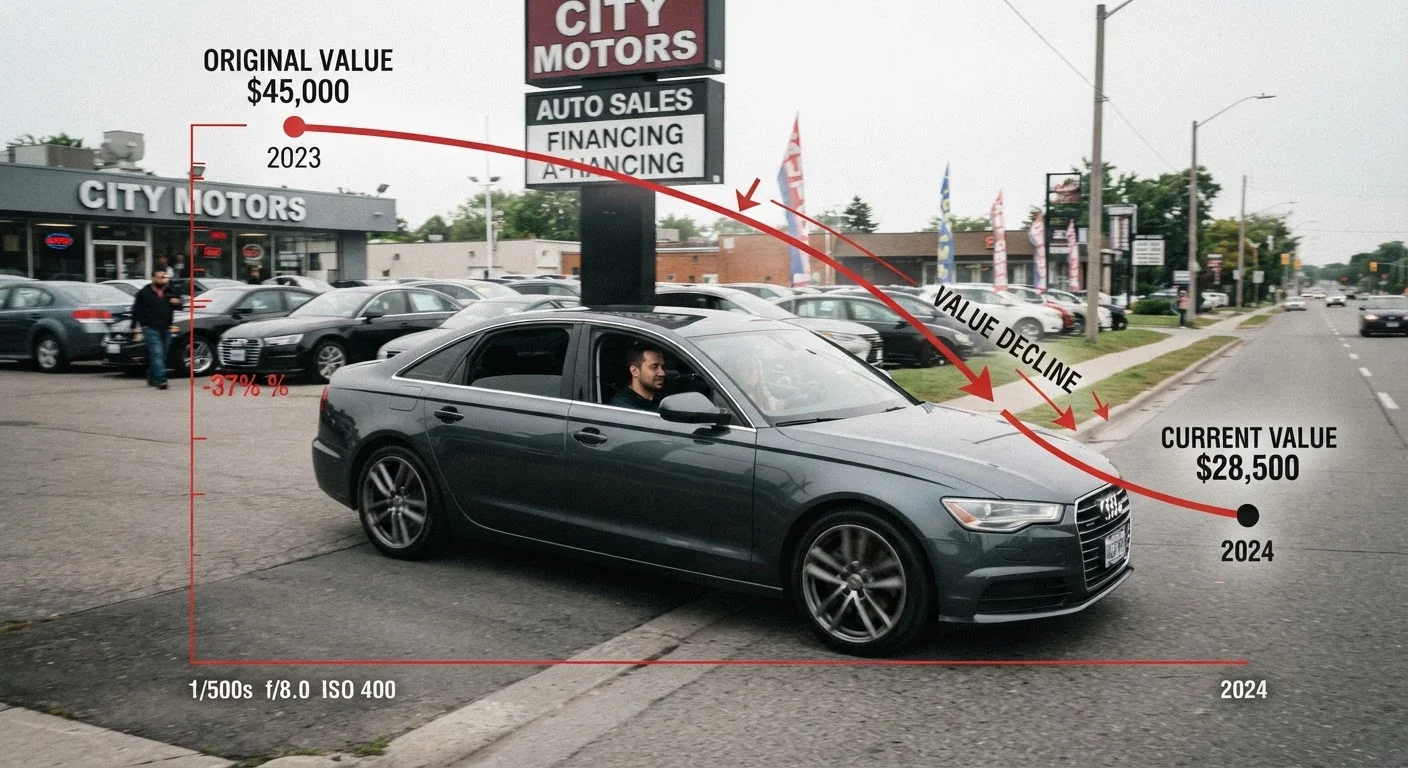
Photo: AnswersVista.com | Trustworthy Information Every Day editorial
Key Takeaways
- A new car can lose 15-25% of its value in the first year alone.
- Depreciation is typically the single largest cost of owning a vehicle.
- Mileage, condition, brand reputation, and market demand all influence how fast a car depreciates.
- Buying a vehicle that's one to three years old can significantly reduce the depreciation you absorb.
- Understanding depreciation helps you make smarter decisions about when to buy, sell, or trade in.
What Happens the Moment You Drive Off the Lot
There's a reason "drives off the lot" has become shorthand for financial loss: the instant a new car is titled in your name, its resale value drops - sometimes by several thousand dollars. That's not a myth or a figure of speech. It reflects the real market gap between a brand-new vehicle and a used one, even if the used vehicle was purchased yesterday.
Dealers price new vehicles with a premium attached to their never-been-owned status. The moment that status changes, so does the price the market will pay. According to industry estimates, many new vehicles shed 15-25% of their value within the first year of ownership. Spread that over the purchase price of even a modestly priced car, and the number becomes significant quickly.
This is why depreciation consistently ranks as one of the largest - and most overlooked - components of the true cost of owning a vehicle. To understand the full financial picture, see our breakdown of what car ownership actually costs annually.
15-25%
Value lost by a new car in year one
Industry estimates consistently show the steepest depreciation occurs within the first 12 months of ownership for most new vehicles.
40-60%
Average value lost over five years
Many new vehicles retain only 40-60% of their original purchase price after five years, according to automotive industry valuation research.
#1
Ranking of depreciation among ownership costs
For many drivers, depreciation exceeds fuel, insurance, and maintenance combined as the largest annual cost of vehicle ownership.
The Depreciation Curve: How Fast It Happens
Depreciation isn't linear. The losses are front-loaded - heaviest in years one through three, then gradually slowing. By the time a vehicle reaches five years of age, many models have lost between 40% and 60% of their original sticker price. After that, the rate of decline usually flattens considerably.
Think of it as a steep hill that levels off into a gentler slope. A car that sells for $35,000 new might be worth around $26,000 after year one, $20,000 after year three, and $15,000 after year five - depending on make, model, condition, and market demand. These are illustrative figures; actual depreciation varies significantly by vehicle.
This curve is exactly why buying a vehicle that's one to three years old is often cited as a financially efficient strategy. You get a car that still has most of its useful life ahead of it, but you avoid absorbing that sharpest initial drop. For a side-by-side look at how this plays out financially, our article on new car vs. used car total ownership costs walks through the math in detail.
What Drives Depreciation? Key Factors to Know
Not all vehicles depreciate at the same rate. Several concrete factors influence how quickly - or slowly - a car loses its market value:
- Mileage: High mileage shortens a vehicle's expected remaining life in the eyes of buyers. Above-average annual mileage accelerates depreciation noticeably.
- Condition: Cosmetic damage, mechanical issues, and poor maintenance records all reduce resale value. A well-documented service history works in your favor.
- Brand and model reputation: Vehicles with a track record of reliability and strong owner loyalty tend to depreciate more slowly. Models perceived as costly to maintain can drop more steeply.
- Market demand and fuel prices: Consumer preferences shift. When fuel prices spike, fuel-efficient vehicles may hold value better; trucks and large SUVs can see the reverse. Supply constraints can temporarily slow depreciation for certain segments.
- Trim level and features: Base-model vehicles without popular options can be harder to resell. Conversely, heavily optioned luxury models may depreciate faster because fewer buyers can justify the premium in the used market.
- Color: Neutral colors - white, black, silver, gray - tend to appeal to a broader pool of buyers and may support stronger resale compared to less popular colors.
How to Use Depreciation to Your Advantage
Understanding depreciation shifts it from a passive financial drain into something you can plan around. A few practical principles apply regardless of your budget or vehicle preference:
Buy used to avoid the steepest drop. Letting the first owner absorb year-one losses is a well-established strategy. A two-year-old vehicle with low mileage and a clean history often represents strong value relative to its remaining useful life.
Hold longer to extract more value. The per-year cost of depreciation drops the longer you own a vehicle - assuming you maintain it. A car owned for ten years spreads that original loss across far more years of use than one traded in after three.
Match your purchase to your timeline. If you know you'll want a different vehicle in two or three years, buying new carries a meaningful financial penalty. Leasing may be structured to account for this - but that involves its own set of trade-offs worth understanding separately.
Track your vehicle's value. Knowing roughly what your car is worth at any given point helps you time trade-ins and refinancing decisions more intelligently. Resources like published industry valuation guides give a reasonable baseline.
For a deeper look at the terminology behind these concepts - including how depreciation relates to total cost of ownership (TCO) - visit our car ownership cost glossary. And if you're thinking about how to manage vehicle costs over the long haul, our guide on what financially savvy drivers do differently covers strategies that go well beyond depreciation.
“Depreciation is the cost most car buyers never see on a window sticker - but it's often the largest expense they'll pay over the life of the vehicle.”
— Automotive industry financial analysts, Vehicle total cost of ownership researchers
Frequently Asked Questions
The content provided on our blog site traverses numerous categories, offering readers valuable and practical information. Readers can use the editorial team’s research and data to gain more insights into their topics of interest. However, they are requested not to treat the articles as conclusive. The website team cannot be held responsible for differences in data or inaccuracies found across other platforms. Please also note that the site might also miss out on various schemes and offers available that the readers may find more beneficial than the ones we cover.