
What a Balanced Plate Actually Looks Like

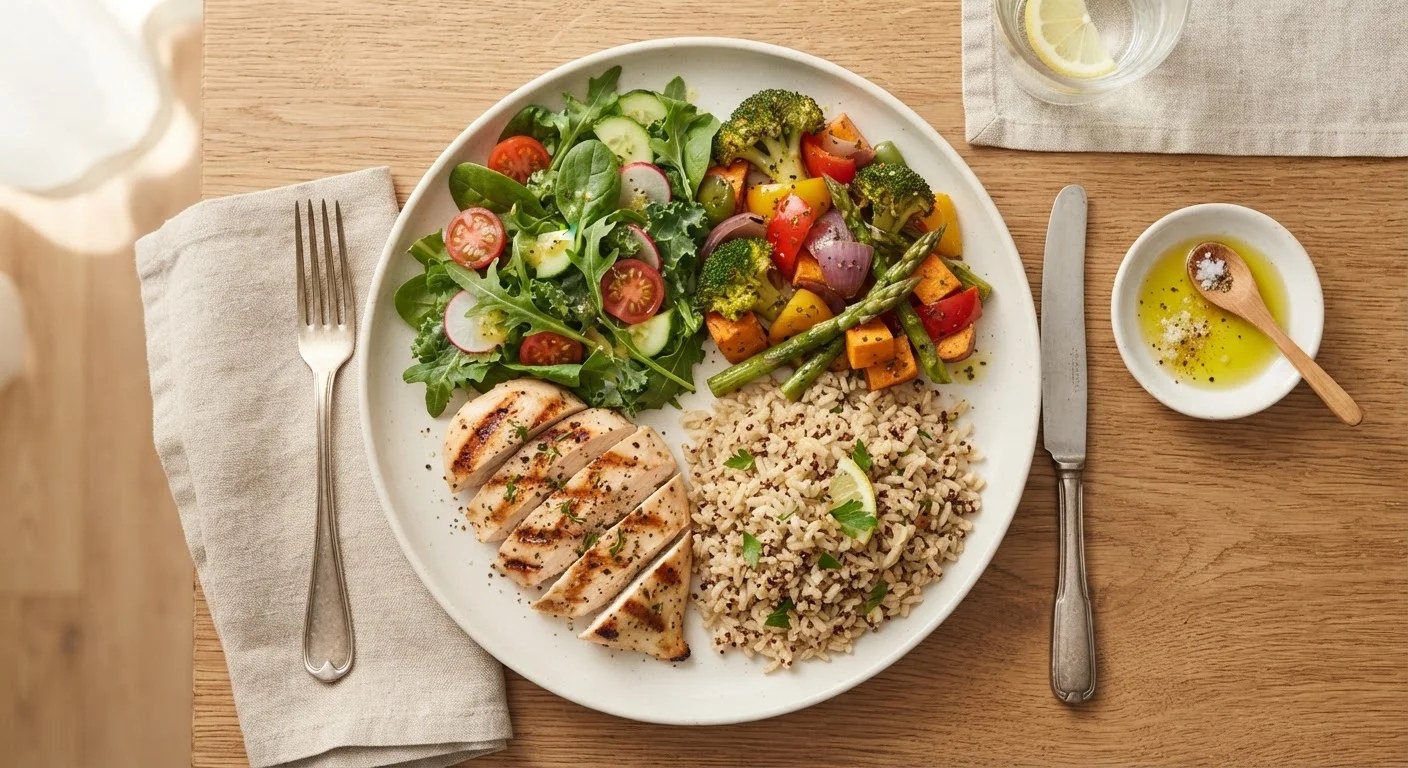
Photo: AnswersVista.com | Trustworthy Information Every Day editorial
The Framework: Dividing Your Plate Visually
Before calorie counting or macro tracking enter the picture, a simple visual framework can take most of the guesswork out of mealtime. The Plate Method - promoted by the USDA through MyPlate and refined by nutrition researchers at Harvard - divides a standard 9-inch dinner plate into proportional sections for each food group.
| Vegetable portion | Half the plate (USDA MyPlate framework) |
| Protein portion | One quarter of the plate (USDA MyPlate framework) |
| Whole grain / starchy food portion | One quarter of the plate (USDA MyPlate framework) |
| Healthy fat serving | Small addition - e.g., a thumb-sized portion of oil, nuts, or avocado (Harvard T.H. Chan School of Public Health, Healthy Eating Plate) |
| Recommended water or low-calorie beverage | Alongside the meal, not sugary drinks (USDA Dietary Guidelines for Americans) |
| Fruit inclusion | Can replace or supplement the vegetable half (USDA MyPlate framework) |
The logic is straightforward: fill half your plate with vegetables and fruit, reserving the other half equally for a lean protein and a whole grain or starchy food. Add a small serving of a healthy fat and a glass of water, and you have the core architecture of a nutritionally sound meal.
If nutrition fundamentals feel unfamiliar, Nutrition from Scratch: A Foundation for Absolute Beginners covers the essential building blocks before you apply any portioning framework.
What Goes in Each Section - and Why
Vegetables and Fruit (Half the Plate)
This is the largest and most nutrient-dense section. Prioritize non-starchy vegetables - leafy greens, broccoli, peppers, tomatoes, zucchini - which deliver fiber, vitamins, minerals, and antioxidants for relatively few calories. Fruit can fill part of this half and contributes natural sugars alongside valuable micronutrients.
This Is General Nutrition Education
Lean Protein (One Quarter)
Protein supports muscle maintenance, immune function, and satiety. Good sources include fish, skinless poultry, eggs, legumes (beans, lentils, chickpeas), tofu, and low-fat dairy. The key is variety - plant-based proteins also bring fiber and minerals that animal sources don't.
Whole Grains or Starchy Foods (One Quarter)
This section powers sustained energy. Whole grains - brown rice, quinoa, whole wheat bread, oats - outperform refined alternatives by retaining fiber and B vitamins. Starchy vegetables like sweet potato or corn can also occupy this portion.
Healthy Fats (Small Addition)
Fat is essential for nutrient absorption and brain function. A small drizzle of olive oil, a few slices of avocado, or a small handful of nuts rounds out the plate. These unsaturated fats are associated with cardiovascular support in population-level research, though individual needs vary.
To understand what the labels on packaged foods in these categories are actually telling you, see Reading a Nutrition Facts Label Without the Confusion.
Applying the Framework in Real Life
The Plate Method is deliberately flexible. It works whether you're eating grilled salmon with roasted asparagus and farro, a burrito bowl, or a stir-fry. The proportions matter more than the specific foods.
Macronutrients
The three primary nutrient categories - protein, carbohydrates, and fat - that supply the body with energy and structural support. Each plays a distinct role in daily physiological function.
Plate Method
A visual portioning framework, widely used in nutrition education, that divides a standard plate into sections for vegetables, protein, and carbohydrates without requiring calorie counting.
Whole Grains
Grains that retain the bran, germ, and endosperm - such as brown rice, oats, and whole wheat - providing more fiber, vitamins, and minerals than refined grains.
Lean Protein
Protein sources that are relatively low in saturated fat, including skinless poultry, fish, legumes, tofu, and low-fat dairy. These support muscle maintenance without excess saturated fat intake.
Unsaturated Fat
Heart-supportive dietary fats found in foods like olive oil, avocado, nuts, and fatty fish. Health authorities generally encourage these in place of saturated and trans fats.
Dietary Fiber
A type of carbohydrate the body cannot digest, found in vegetables, fruits, legumes, and whole grains. Fiber supports digestive health, blood sugar regulation, and satiety.
- Mixed dishes: For soups, stews, casseroles, or grain bowls, mentally estimate whether the same proportions hold - more vegetables than protein or starch.
- Eating out: Restaurant portions often skew heavily toward starch or protein. Ordering a side salad or extra vegetables can rebalance the meal.
- Snacks: The Plate Method doesn't apply rigidly to snacks, but pairing a protein with a fruit or vegetable mirrors the same balancing instinct.
Building these habits consistently over time matters more than any single perfect meal. Building Sustainable Eating Habits: Principles That Actually Hold explores how to make balanced eating a durable practice rather than a short-term effort. For help selecting these foods at the store, Grocery Shopping With Nutrition in Mind offers a practical aisle-by-aisle checklist.
This article is for general informational and educational purposes only and does not constitute medical or dietary advice. Individual nutritional needs differ. Please consult a registered dietitian or qualified healthcare professional for guidance tailored to your health situation.
The content provided on our blog site traverses numerous categories, offering readers valuable and practical information. Readers can use the editorial team’s research and data to gain more insights into their topics of interest. However, they are requested not to treat the articles as conclusive. The website team cannot be held responsible for differences in data or inaccuracies found across other platforms. Please also note that the site might also miss out on various schemes and offers available that the readers may find more beneficial than the ones we cover.