
Why Your Closet Gets Disorganized Again Within Weeks

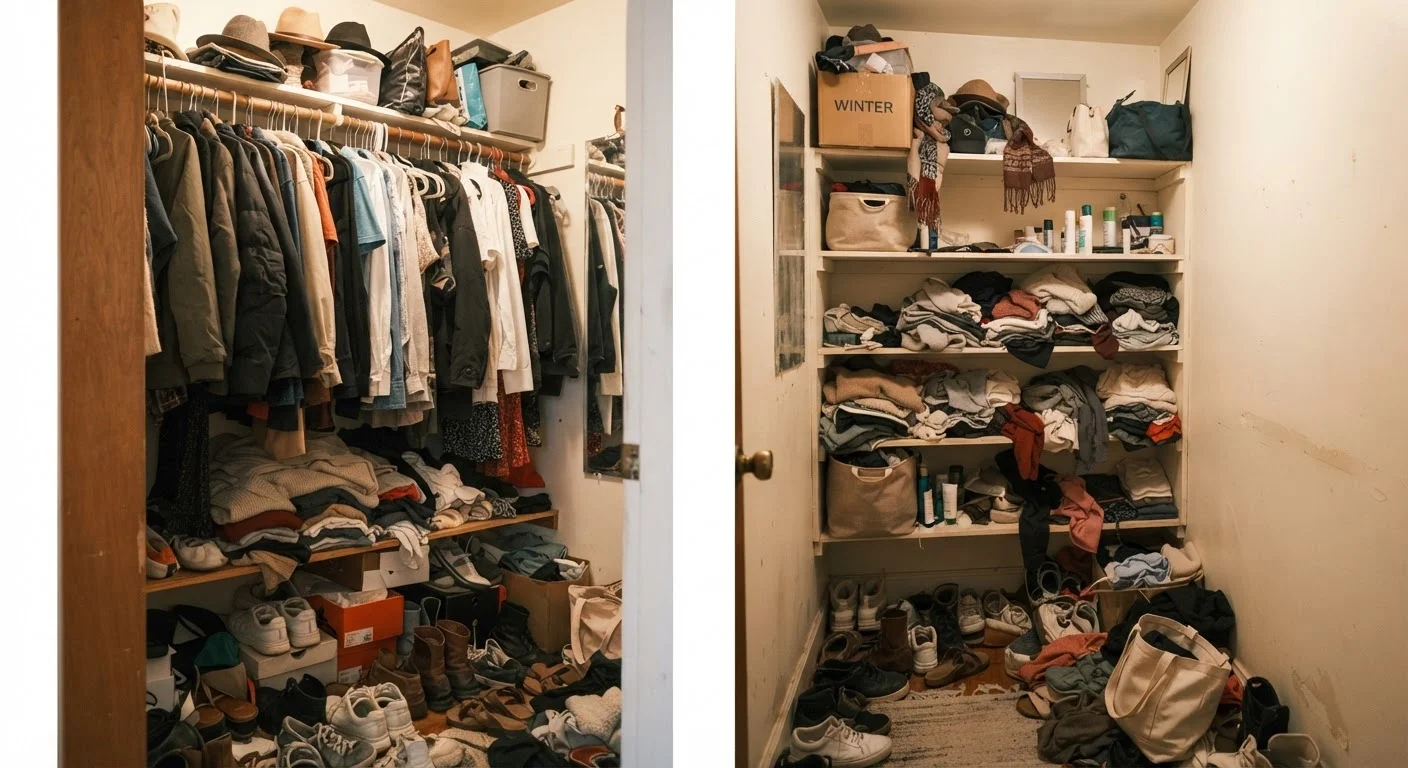
Photo: AnswersVista.com | Trustworthy Information Every Day editorial
Key Takeaways
- Closets revert to chaos mainly because the system doesn't match how you actually use the space.
- Decluttering without restructuring storage often fails within weeks.
- Friction - like hard-to-reach bins or missing hooks - is the silent killer of closet organization.
- Sustainable closet order requires habits, not just a one-time overhaul.
- Too many categories and containers create more confusion than clarity.
The Real Reason Your Closet Keeps Falling Apart
You spend a Saturday afternoon pulling everything out, folding neatly, and putting it all back. Two weeks later, it looks exactly as it did before. Sound familiar? The problem usually isn't motivation or discipline - it's that the underlying system wasn't designed to last.
Most closet relapses trace back to a handful of predictable mistakes. Recognizing them is the first step toward building a setup that actually holds. If you're new to thinking about organization systematically, our beginner's guide to home organization is a helpful starting point before diving deeper.
Decluttering without adjusting the storage structure.
Creating too many categories or overly specific zones.
Storing items by aesthetics rather than frequency of use.
Adding containers and bins without clearing space first.
No plan for items that don't belong in the closet.
Skipping a maintenance habit after the initial organization.
Why Setup Flaws Outlast Good Intentions
Habits and systems are deeply connected. Research in behavior design consistently shows that when the environment makes the right action easy, people follow through far more reliably than when they're relying on willpower alone. A closet that requires you to move three things to hang up one item will never stay tidy - because the friction cost is just too high to sustain daily.
80%
Of clutter is from indecision, not shortage of space
Professional organizers commonly cite indecision at the point of put-away as the primary driver of accumulating clutter, rather than insufficient storage capacity.
~5 min
Weekly reset time to prevent full relapses
Home organization experts generally recommend brief, consistent maintenance sessions rather than infrequent deep cleans to sustain organized spaces over time.
It's also worth questioning some of the assumptions behind your current approach. Many popular organizing ideas - like color-coding everything or buying matching storage sets - actually add complexity without improving function. Our look at common home organization myths unpacks why aesthetics-first thinking often backfires.
For a room-by-room perspective that ties closet organization into your broader home systems, see The Complete Guide to Organizing Every Room in Your Home.
Building a System That Actually Holds
Durable closet organization isn't about perfection - it's about reducing the mental and physical effort required to maintain it. A few principles reliably separate systems that hold from those that collapse:
- Match storage to behavior. Store items where you naturally reach for them, not where they look best.
- Limit categories. The more sorting decisions required, the faster the system breaks down under daily pressure.
- Reserve prime real estate. Frequently used items should occupy the most accessible spots - eye level and within easy arm's reach.
- Build a reset ritual. A five-minute weekly tidy is far more effective than waiting until the closet demands a full overhaul.
Avoid Reorganizing Before Decluttering
Interestingly, the mental patterns that cause closets to relapse mirror those that derail other habits. The same friction-reduction logic applies whether you're organizing a wardrobe or trying to build consistency in other areas of daily life - as explored in our piece on digital and physical clutter.
The goal isn't a magazine-worthy closet. It's a closet you can maintain in real life, on a Tuesday morning, when you're already running late.
The content provided on our blog site traverses numerous categories, offering readers valuable and practical information. Readers can use the editorial team’s research and data to gain more insights into their topics of interest. However, they are requested not to treat the articles as conclusive. The website team cannot be held responsible for differences in data or inaccuracies found across other platforms. Please also note that the site might also miss out on various schemes and offers available that the readers may find more beneficial than the ones we cover.