
Generic vs. Name-Brand: What the Label Difference Actually Means

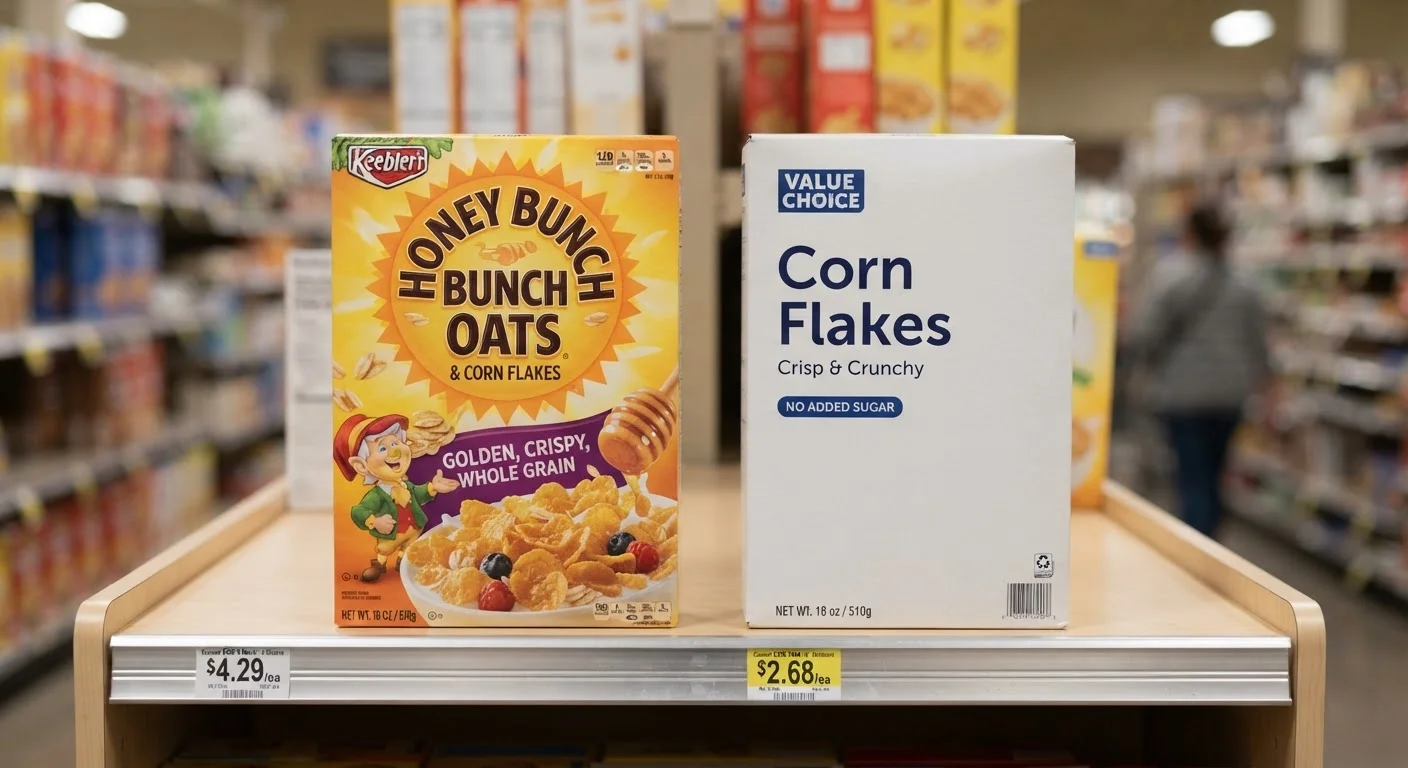
Photo: AnswersVista.com | Trustworthy Information Every Day editorial
Key Takeaways
- Generic and name-brand products often share the same core ingredients or components, especially in regulated categories like pharmaceuticals.
- The price gap between generics and name brands frequently reflects marketing spend and brand equity, not manufacturing quality.
- In some categories - like complex electronics and specialty tools - brand-specific engineering can justify a higher price.
- Regulated products (OTC medications, infant formula) must meet identical federal standards regardless of the label.
- Packaging, flavor, and texture can differ even when active ingredients are the same - worth checking before assuming identical results.
- Evaluating the actual ingredients or specs, rather than the label, is the most reliable way to compare the two.
Where the Price Gap Actually Comes From
The price difference between name-brand and generic products rarely comes from the factory floor. Name brands invest heavily in national advertising campaigns, celebrity endorsements, premium shelf placement, and elaborate packaging - all costs that get baked into the retail price. Generic products skip most of that overhead, passing the savings directly to consumers.
That structure means the quality of what's inside the package is often decoupled from what's on the outside. Many store-brand products are manufactured in the same facilities as their name-brand equivalents, especially in food and over-the-counter (OTC) healthcare categories. The difference is the label, not the production line.
Understanding this distinction is the foundation for smarter comparisons - something this breakdown of value versus price explores in detail. A lower sticker price is only a better deal when the underlying product holds up.
| Criterion | Name-Brand Products | Generic (Store-Brand) Products |
|---|---|---|
| Typical price point | Higher - includes marketing costs | Lower - minimal advertising overhead |
| Active ingredients (OTC meds) | FDA-regulated standard | Identical by federal requirement |
| Formulation transparency | Varies; some proprietary blends | Typically standardized commodity |
| Packaging & presentation | Premium design and branding | Minimal, functional packaging |
| After-sale support | Often includes warranty or helpline | Limited or retailer-dependent |
| Proprietary technology | May include patented features | No access to patented formulations |
| Manufacturing source | Brand-owned or contracted | Often the same contracted facility |
Categories Where Generics Are Effectively Identical
Regulated product categories are where the generic-versus-name-brand debate is clearest. The U.S. Food and Drug Administration (FDA) requires that generic OTC medications - think pain relievers, antacids, or allergy tablets - contain the same active ingredients in the same concentrations as branded versions. They must also meet the same standards for purity and shelf stability. Paying more for a branded acetaminophen tablet versus a store-brand version with the same milligram dosage buys nothing pharmacologically meaningful.
The same logic applies to most pantry staples. White granulated sugar, all-purpose flour, and canned tomatoes are commodity goods graded to federal or industry standards. Store-brand versions of these products are almost always sourced from the same processors as name brands.
~80-85%
Generic drug market share by volume in the U.S.
According to the FDA, generic drugs account for roughly 80-85% of all prescriptions dispensed in the United States, reflecting widespread acceptance of their equivalence.
20-90%
Typical price savings on generic OTC vs. name brand
The FDA notes that generic medications typically cost significantly less than their brand-name counterparts, with savings varying widely by product category.
~40%
Average price difference between store-brand and name-brand groceries
Consumer research from the Private Label Manufacturers Association has historically found store-brand grocery items priced approximately 40% below comparable name-brand products on average.
For a deeper look at how labels and certifications shape perception without always reflecting quality, see which certifications actually carry weight.
Categories Where the Brand Name Signals Something Real
The calculus shifts in categories where proprietary formulation, engineering tolerances, or meaningful accountability matter. In complex consumer electronics, brand-name manufacturers often control component sourcing, firmware development, and product testing in ways that discount or no-name alternatives cannot credibly replicate. This doesn't mean premium pricing always equals superior performance - common pricing myths in electronics are worth understanding - but it does mean the gap can be real.
Similarly, some name-brand formulations are genuinely differentiated. A patented slow-release coating, a proprietary enzyme blend, or a specific polymer structure cannot legally appear in a generic version until the patent expires. In these cases, buying the generic may mean buying a functionally different product, not just a cheaper copy.
When specs between two products look nearly the same on paper, the structured approach to comparing similar products can help surface the differences that actually matter before you commit.
How to Evaluate Any Generic vs. Name-Brand Decision
The practical framework is straightforward: compare the ingredient list or technical specification sheet, not the packaging. For OTC medications, look at the active ingredient and dosage. For food products, check the ingredient order and nutritional panel. For household goods or hardware, match the material specs and tolerances side by side.
If those are equivalent, the generic is almost always the rational choice. If the name-brand version contains a differentiated ingredient, holds a relevant certification, or offers post-purchase support the generic lacks, the premium may be justified.
Also consider consistency. Some shoppers report texture or flavor differences in food generics even when core ingredients match - inactive ingredients, processing methods, and sourcing can vary. Testing a smaller quantity first is a low-risk way to verify before switching wholesale.
For a broader look at how to assess value beyond the label across product categories, the Product Comparisons hub offers structured side-by-side breakdowns across common buying decisions.
The content provided on our blog site traverses numerous categories, offering readers valuable and practical information. Readers can use the editorial team’s research and data to gain more insights into their topics of interest. However, they are requested not to treat the articles as conclusive. The website team cannot be held responsible for differences in data or inaccuracies found across other platforms. Please also note that the site might also miss out on various schemes and offers available that the readers may find more beneficial than the ones we cover.