
Packing for Unpredictable Weather: Building a Versatile Travel Wardrobe

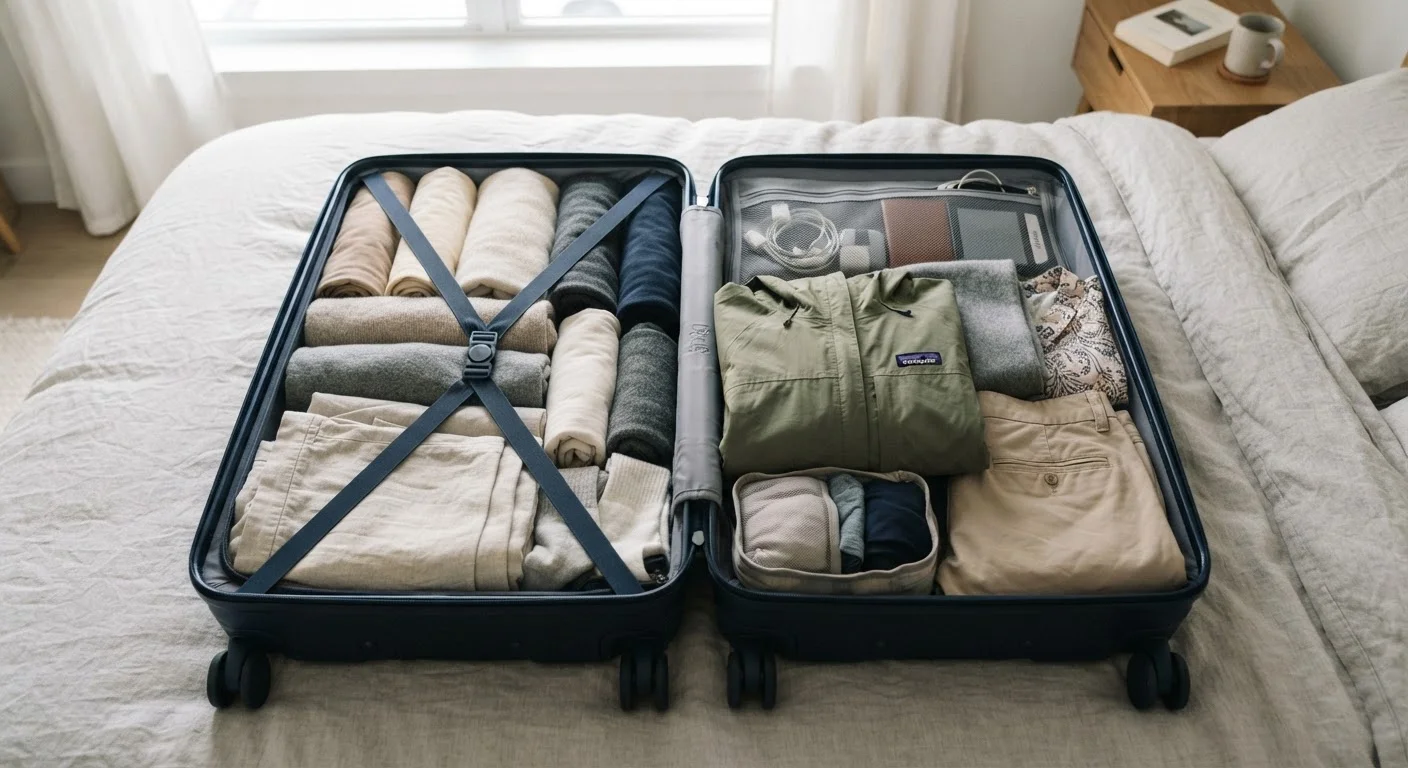
Photo: AnswersVista.com | Trustworthy Information Every Day editorial
Key Takeaways
- Layering with three functional clothing zones keeps you comfortable across wide temperature swings.
- Fabric choice matters more than quantity — moisture-wicking and quick-dry materials do double duty.
- Neutral color palettes multiply outfit combinations without adding extra pieces to your bag.
- A packable outer shell is the single highest-impact item for unpredictable weather destinations.
- Planning outfits around mix-and-match basics eliminates redundant pieces and reduces pack weight.
Why Unpredictable Weather Demands a Different Packing Strategy
Mountain towns, coastal destinations, and shoulder-season cities all share one trait: the forecast is a suggestion, not a guarantee. A sunny morning in San Francisco can turn cold and foggy by noon. An April trip to the Great Smoky Mountains might mean 70°F on day one and frost on day three. Packing for these conditions requires a system, not just a list.
The mistake most travelers make is packing for scenarios — one outfit for rain, one for warmth, one for a nice dinner — rather than packing for flexibility. That approach fills a bag fast and still leaves you underprepared. The fix is building a wardrobe where every piece interacts with every other piece, and where you can adjust your comfort level simply by adding or removing a layer.
For a broader framework on how to approach any trip's packing from the ground up, see our complete packing guide.
The Three-Layer System: Your Core Framework
Functional layering divides your clothing into three zones, each with a specific job.
- Base layer: Sits against your skin and manages moisture. Merino wool and synthetic blends (polyester, nylon) are the workhorses here. They pull sweat away from the body, dry quickly, and resist odor — meaning you can re-wear them without issue. Cotton is comfortable at home but absorbs moisture and stays wet, making it a poor choice for variable conditions.
- Mid layer: Provides insulation. A lightweight fleece or a down-fill vest works here. Vests are particularly efficient because they protect your core without restricting arm movement or adding bulk. Fleece packs down reasonably well and insulates even when damp, which down does not.
- Outer layer: Blocks wind and water. A packable rain shell — not a heavy waterproof jacket — is ideal. Look for a shell that compresses to the size of its own pocket. This single item transforms your layering system from a cold-weather kit into an all-conditions kit.
These three layers, stacked or shed as conditions change, cover an impressive temperature range. Two people packing this way can often share a single mid-sized bag — which is exactly the logic behind fitting a full week into a personal item bag.
Test Your Layers Before You Leave
Fabric Selection: What to Pack and What to Leave Home
The fabrics you choose determine how far your wardrobe stretches. The goal is quick-dry, low-odor, and wrinkle-resistant — traits that let pieces pull double or triple duty across days and activities.
Choose merino wool base layers over cotton for any destination with temperature swings.
Pack a packable rain shell regardless of the forecast.
Select bottoms in fabrics with at least some stretch and quick-dry properties.
Limit shoes to two pairs maximum, with each handling multiple activity types.
Use a lightweight down or synthetic vest as your primary insulating layer.
One pattern that trips up travelers: overestimating how much specialized gear they need. Many items marketed for specific conditions — heavy waterproof pants, insulated boots for mild winters, destination-specific layers — spend most of a trip at the bottom of a bag. Our article on common gear myths that cause overpacking breaks down which "essentials" usually aren't.
Color Strategy and Outfit Multiplication
A versatile travel wardrobe isn't just about what individual pieces can do — it's about how many combinations they create together. Limiting your palette to two or three neutral tones (navy, grey, olive, black, tan) means almost everything pairs with everything else. Add one or two pieces with subtle texture or a single accent color to keep outfits from feeling monotonous.
A practical test before you pack: lay out every item and count distinct outfits. If five bottoms and six tops only produce six combinations because everything is highly specific or clashing, you've wasted space. The same five bottoms in coordinating neutrals could yield 20+ combinations — enough for any trip length.
If your destination has genuine seasonal extremes, check our destination-specific tips before finalizing your list. Climate variation by region means what works for a Pacific Northwest trip may not transfer directly to the desert Southwest.
Practical Packing Habits That Keep the System Working
Even the right clothing fails if it's disorganized in your bag. A few simple habits keep your layering system accessible and functional throughout the trip.
Roll instead of fold for most items — it reduces creasing and makes contents visible at a glance. Keep your outer shell and one mid-layer at the top or in an exterior pocket so they're reachable without unpacking everything when weather shifts suddenly.
Plan to do laundry on trips longer than five days rather than packing more. Quick-dry fabrics make this practical even with a bathroom sink and a travel towel. This habit alone allows many travelers to downsize from a checked bag to a carry-on without sacrificing comfort — a shift that saves both time and money at the airport.
Laundry Access Varies by Destination
If you're newer to building efficient packing habits, the beginner's guide to packing smart is a useful starting point before moving to more advanced strategies.
The content provided on our blog site traverses numerous categories, offering readers valuable and practical information. Readers can use the editorial team’s research and data to gain more insights into their topics of interest. However, they are requested not to treat the articles as conclusive. The website team cannot be held responsible for differences in data or inaccuracies found across other platforms. Please also note that the site might also miss out on various schemes and offers available that the readers may find more beneficial than the ones we cover.