
How Turbochargers Work - and the Maintenance They Demand

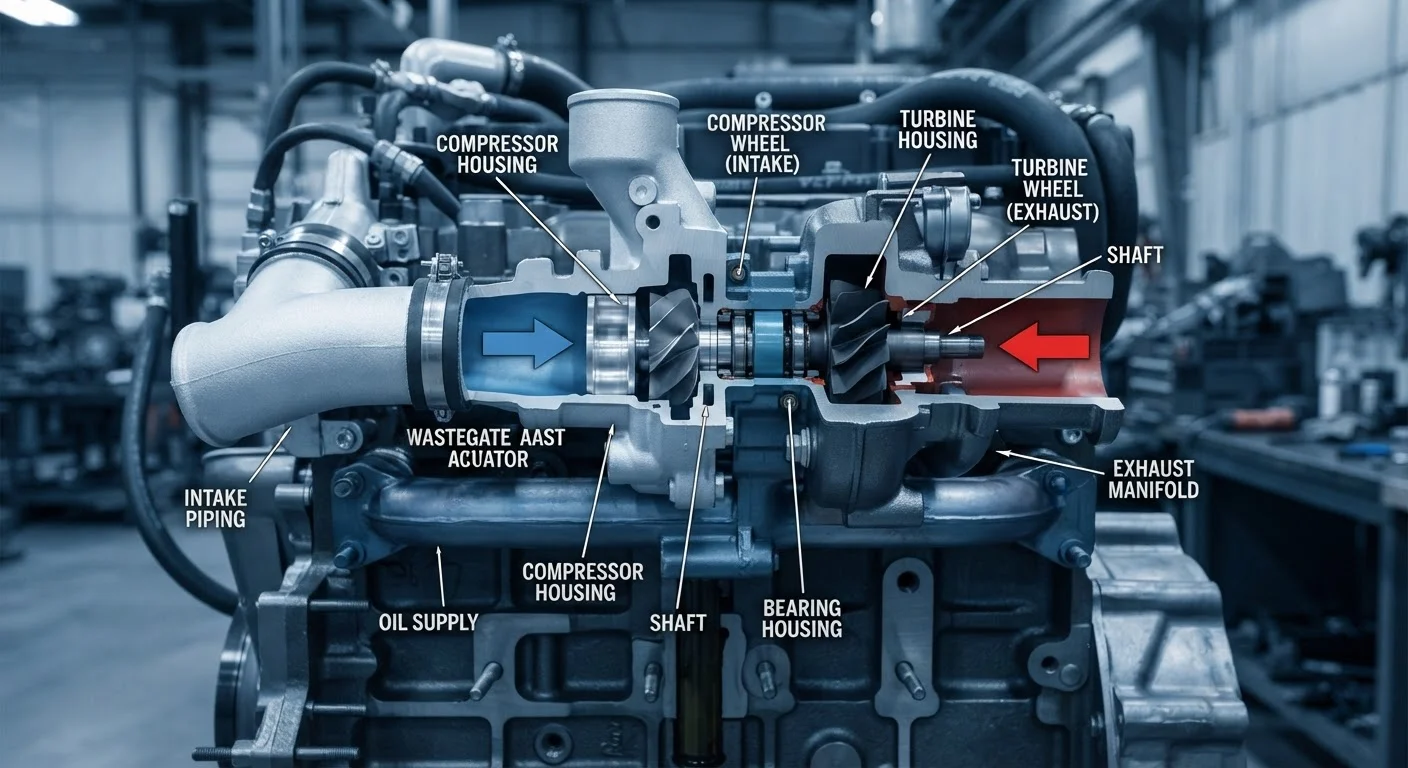
Photo: AnswersVista.com | Trustworthy Information Every Day editorial
Key Takeaways
- Turbochargers boost engine power by compressing intake air using energy from exhaust gases.
- They allow smaller engines to produce power comparable to larger naturally aspirated ones.
- Oil is the lifeblood of a turbocharger - fresh, clean oil is essential to its survival.
- Letting the engine idle briefly before shutdown protects the turbo from heat soak damage.
- Unusual whining, loss of power, or blue smoke can signal early turbo trouble.
- Following manufacturer oil-change intervals is the single most important turbo maintenance habit.
The Mechanics in Plain Terms
Picture your engine as a pump. It pulls in air, mixes it with fuel, ignites the mixture, and expels the burned gases as exhaust. A naturally aspirated engine relies on atmospheric pressure alone to fill its cylinders. A turbocharger does something clever: it captures the energy in those outgoing exhaust gases and uses it to do extra work.
Here's the sequence: exhaust gases spin a turbine wheel housed inside the turbocharger. That turbine sits on a shared shaft with a compressor wheel on the other side. As the turbine spins - sometimes exceeding 100,000 RPM - it drives the compressor, which draws in fresh air, pressurizes it, and pushes it into the engine's intake. The result is denser, oxygen-rich air filling each cylinder, enabling a larger fuel charge and a more powerful combustion event.
Because compressed air heats up as it's pressurized, many turbocharged engines route the air through an intercooler before it enters the cylinders. Cooler, denser air is more oxygen-rich and less likely to cause premature detonation - a condition called knock. This component is one reason turbocharged engines can be both powerful and relatively efficient. For a broader look at how heat affects engine components, see why cars overheat and what's happening under the hood.
100,000+
RPM a turbocharger shaft can reach
Engineering references cite turbocharger shaft speeds commonly exceeding 100,000 RPM - far beyond any other rotating component in a typical passenger vehicle.
30-40%
Potential power increase from turbocharging
Turbocharging a given engine displacement can yield power increases in the range of 30-40% compared to naturally aspirated equivalents, according to general automotive engineering literature.
~1,000°F
Exhaust temperatures entering the turbine
Exhaust gases driving the turbine wheel can approach or exceed 1,000°F (538°C) under load, underscoring why oil quality and heat management are so critical to turbo longevity.
Why Oil Is the Turbocharger's Lifeline
The turbine shaft spins at extraordinary speeds, supported by plain bearings that depend entirely on a thin film of pressurized engine oil. No roller bearings, no grease - just oil. If that oil supply is dirty, low, or degraded, the bearings wear rapidly. This makes oil maintenance the single most consequential factor in turbocharger longevity.
Mechanics consistently point to two root causes of premature turbo failure: infrequent oil changes and oil that has broken down thermally. When oil ages, it loses viscosity and its ability to maintain that protective film under extreme heat. The turbocharger runs hotter than most other engine components, so degraded oil fails there first.
Match Your Oil to Your Engine's Spec
Always use the oil viscosity and specification called for in your owner's manual. Turbocharged engines frequently require full-synthetic oil, and skipping to a cheaper conventional oil - even temporarily - can shorten turbo life. For context on how consistent upkeep translates to real savings, see the long-term payoff of routine maintenance.
Day-to-Day Habits That Protect Your Turbo
Beyond oil changes, a few driving and shutdown habits make a measurable difference in turbocharger health.
- Allow brief idle time before shutdown. After spirited driving or highway cruising, idling for 30-60 seconds lets oil continue circulating through the turbo while temperatures drop. Cutting the engine immediately traps heat, which can carbonize residual oil in the bearings - a phenomenon called heat soak or coking.
- Avoid hard acceleration immediately after a cold start. Oil pressure takes a few seconds to fully circulate at startup. Allowing the engine to idle momentarily before demanding full throttle reduces dry-running stress on turbo bearings.
- Monitor for warning signs. A high-pitched whine, a whistling noise under boost, blue or gray exhaust smoke, or an unexplained drop in power are all worth investigating. Catching a developing problem early - a failing seal or worn bearing - is far less costly than a full replacement.
Owners of high-mileage vehicles with turbos should pay especially close attention to these habits. The guide to keeping a high-mileage car reliable covers fluid care and inspection intervals that apply directly to aging turbocharged drivetrains.
What Turbo Maintenance Actually Costs - and When to See a Mechanic
Routine turbo maintenance is largely inseparable from routine engine maintenance. Staying current on oil changes, using the correct oil specification, and practicing good driving habits costs very little beyond what you'd spend on any well-maintained vehicle. The expenses escalate only when preventive care is neglected.
Turbocharger replacement, when required, is a significant repair. Labor is substantial because the unit is integrated with the exhaust system, and parts costs vary widely by vehicle. This is firmly a job for a qualified mechanic - turbo systems involve hot exhaust components and precision oil feed lines that must be reconnected correctly.
For unfamiliar terms you encounter during a shop visit - wastegate, boost pressure, intercooler - the Car Care A-Z glossary offers plain definitions. And for a complete framework of vehicle upkeep, the complete owner's maintenance roadmap puts turbo care in the context of everything else your vehicle needs.
Frequently Asked Questions
The content provided on our blog site traverses numerous categories, offering readers valuable and practical information. Readers can use the editorial team’s research and data to gain more insights into their topics of interest. However, they are requested not to treat the articles as conclusive. The website team cannot be held responsible for differences in data or inaccuracies found across other platforms. Please also note that the site might also miss out on various schemes and offers available that the readers may find more beneficial than the ones we cover.