
Lawn & Garden

Keeping a Productive Garden Going Through a Hot, Dry Summer

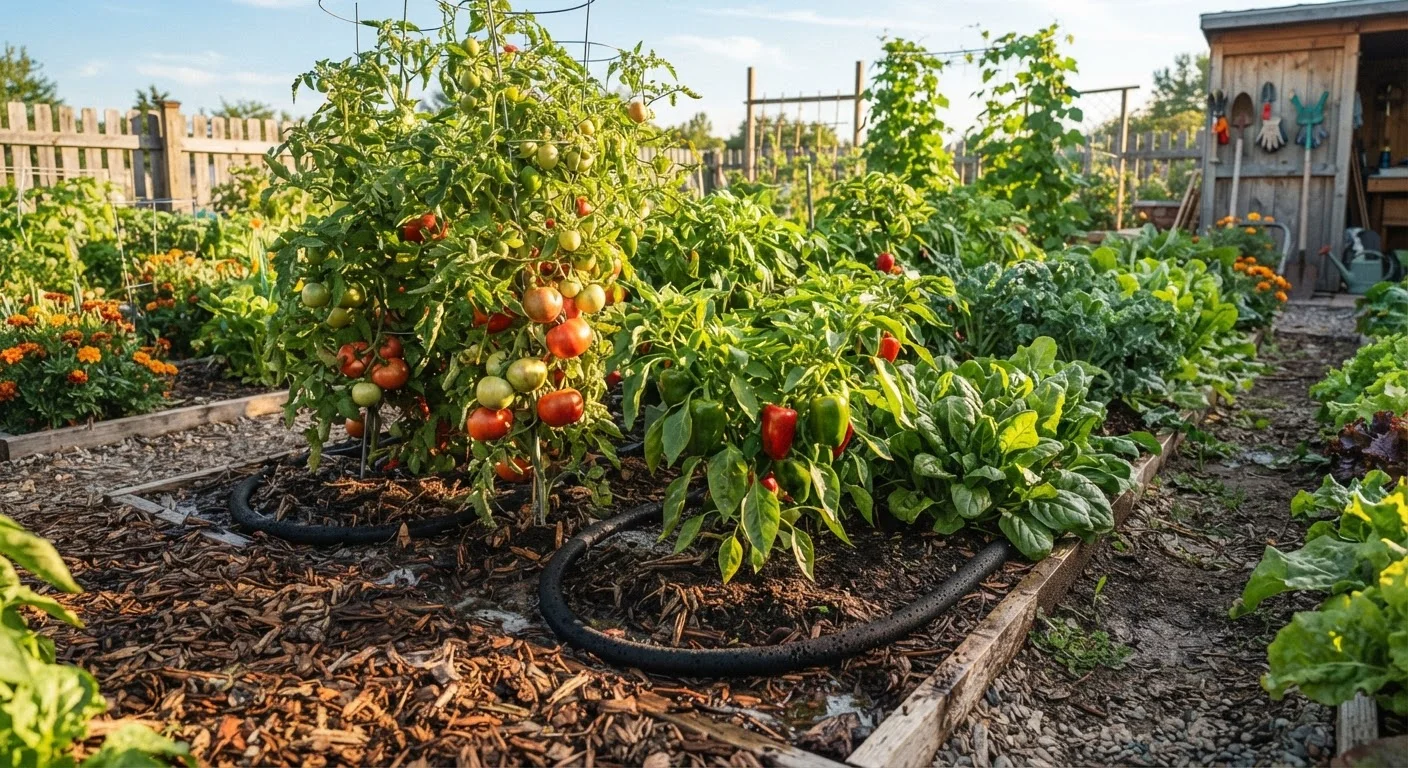
Keeping a Productive Garden Going Through a Hot, Dry Summer

Photo: AnswersVista.com | Trustworthy Information Every Day editorial

Heat and drought stress plants in predictable ways. These proven practices help your garden stay productive even through the hardest summer weeks.

Key Takeaways

  • Deep, infrequent watering encourages roots to grow downward and become more drought-resilient.
  • A 2–4 inch layer of organic mulch can cut soil moisture loss by up to 70 percent.
  • Timing tasks like watering and harvesting for early morning reduces plant stress significantly.
  • Heat-stressed plants are more vulnerable to pests and disease, so monitoring closely matters more in summer.
  • Shade cloth and strategic companion planting can lower soil and foliage temperatures measurably.

Why Summer Heat Stresses Plants the Way It Does

When temperatures climb and rainfall disappears, plants face two compounding problems: they lose water through their leaves faster than their roots can replace it, and the soil itself becomes less hospitable — drying, cracking, and heating up in ways that damage root systems. The result is wilting, leaf scorch, slowed growth, and, in prolonged cases, crop loss.

Understanding this mechanism matters because the most effective summer garden practices all address the same underlying goal: keeping more moisture in the soil longer, reducing heat load on plant tissue, and helping roots access what water is available. If you're just getting started with a vegetable garden, building these habits from the beginning pays off in every hot season ahead.

1

Water deeply and infrequently rather than a little every day

Shallow, frequent watering keeps moisture near the surface, where it evaporates quickly and encourages roots to stay shallow. Deep watering — soaking the soil to a depth of 6–8 inches — trains roots to grow downward toward cooler, moister layers, making plants considerably more drought-tolerant. Allowing the top inch or two of soil to dry between sessions also discourages surface weeds.
Example: Run a soaker hose or drip irrigation for 45–60 minutes twice a week rather than 10 minutes every day, then use a trowel to check that water has penetrated several inches below the surface.
2

Apply a 2–4 inch layer of organic mulch around every planting bed

Mulch acts as insulation for your soil — it blocks direct sun, slows evaporation, moderates soil temperature, and gradually adds organic matter as it breaks down. Research from university extension programs consistently identifies mulching as one of the highest-impact single actions for summer garden health.
Example: Spread straw, shredded wood chips, or dried grass clippings around tomatoes and peppers, keeping mulch a few inches away from the main stem to prevent rot.
3

Schedule watering and harvesting for early morning

Morning watering allows moisture to reach the root zone before afternoon heat accelerates evaporation from the soil surface. It also ensures foliage dries before evening, reducing fungal disease risk. Harvesting vegetables in the morning, before heat sets in, yields produce that tastes better and stores longer.
Example: Set an irrigation timer for 5–6 a.m. and do your harvesting walk right after — you'll pick cucumbers and beans at their peak before heat causes them to become soft or bitter.
4

Use shade cloth to protect heat-sensitive crops during peak afternoon hours

Crops like lettuce, spinach, cilantro, and broccoli bolt (go to seed prematurely) when sustained temperatures exceed about 80–85°F. A lightweight shade cloth — 30–40% shade rating works for most vegetables — can lower the temperature beneath it by several degrees, meaningfully extending the productive life of cool-season crops into summer.
Example: Drape a 30% shade cloth over a simple PVC hoop frame above a lettuce bed during afternoon hours, removing it in the morning to allow full-spectrum light in cooler conditions.
5

Inspect plants frequently for pest and disease pressure

Heat-stressed plants have reduced capacity to defend themselves, making them more attractive to common pests like spider mites — which thrive in hot, dry conditions — and more vulnerable to opportunistic fungal issues. Catching problems early, when populations are small, is far easier than managing a full infestation.
Example: Do a quick visual check of leaf undersides every two to three days; spider mites appear as fine webbing and tiny moving specks, and are most easily managed with a strong spray of water when caught early.
6

Pull spent plants and weeds promptly to reduce competition for water

Weeds compete directly with your crops for whatever moisture the soil holds. A spent or dying plant offers the same competition with none of the productivity. Clearing them out quickly redirects limited resources — water, nutrients, root space — to your healthy, producing plants.
Example: After a zucchini plant stops setting fruit in midsummer heat, pull it out rather than leaving it in place; direct that bed's water to neighboring pepper plants that are still actively producing.

Proven Practices for a Summer-Resilient Garden

The following approaches are grounded in established horticultural practice. None of them require specialized equipment or expertise — just consistent attention and a willingness to work with your garden's natural rhythms rather than against them.

high Check your mulch depth today and add more if it's thinner than 2 inches — this single step can have an immediate impact on soil moisture retention.
high Move your watering schedule to 5–6 a.m. starting tomorrow by adjusting your irrigation timer or setting a morning alarm.
medium Do a five-minute pest inspection this evening, checking leaf undersides on your most stressed-looking plants for early signs of spider mites or aphids.
medium Pull any weeds visible in your beds right now — even removing a handful reduces immediate competition for soil moisture.

Putting It All Together: A Summer Management Mindset

The common thread running through every effective summer practice is reducing the distance between your garden's needs and what the environment is providing. Mulch closes the gap on moisture loss. Deep watering closes the gap on root reach. Shade cloth closes the gap on thermal stress. No single tactic does everything, but layered together, they add up to a garden that stays genuinely productive even in difficult weeks.

If you're weighing a longer-term shift toward plants that naturally handle dry heat, native plants offer a practical case worth reading — and low-maintenance landscaping strategies can reduce how much active intervention your yard needs season to season. It's also worth being careful not to overcorrect: watering more doesn't always mean a healthier garden, and saturating stressed soil can create its own set of problems.

Track what works in your specific yard. Soil type, sun exposure, and your local climate all shape which practices deliver the biggest returns. A simple garden journal — even just notes on a phone — turns one summer's observations into next summer's head start.

Home & Garden Editorial Team

AnswersVista.com | Trustworthy Information Every Day

Home & Garden Editorial Team is the collective byline for our editorial team and contributor network. Articles published under this byline or an editorial pen name are researched, written, and reviewed according to our editorial standards for clarity, consistency, and independence before publication.

Home ImprovementLawn & GardenHome Organization
View author profile

The content provided on our blog site traverses numerous categories, offering readers valuable and practical information. Readers can use the editorial team’s research and data to gain more insights into their topics of interest. However, they are requested not to treat the articles as conclusive. The website team cannot be held responsible for differences in data or inaccuracies found across other platforms. Please also note that the site might also miss out on various schemes and offers available that the readers may find more beneficial than the ones we cover.